
Parts and hardware
Garage Door Cable, Roller And Track Repair
Cable, roller, and track repair fixes the hardware that keeps the garage door lifting straight and moving smoothly.
Phone: (928) 459-2105
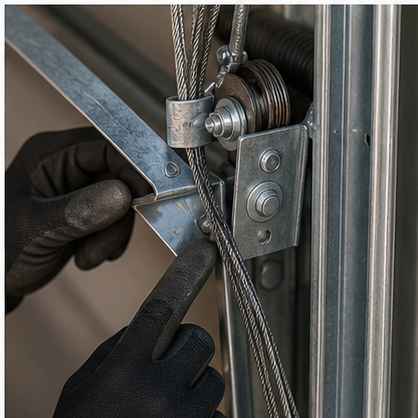
Hardware repair visit
Cables, rollers, tracks, and hinges decide whether the door travels straight.
These repairs should be checked as a system because one failed part can stress the rest of the door.
Cables, rollers, and tracks are the quiet troublemakers. When one piece starts binding, the whole door can begin moving crooked.
Moving hardware
Cables, rollers, hinges, and tracks decide whether the door travels straight.
Moving hardware
Cables, rollers, tracks, and hinges guide the door and keep both sides lifting evenly.
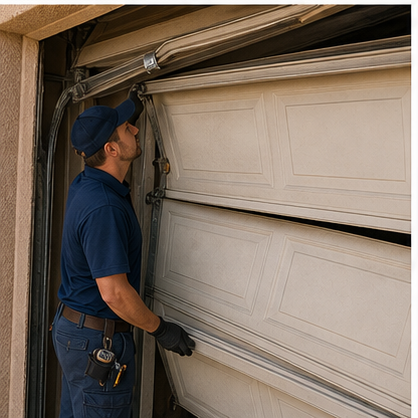
Crooked door risk
Hardware wear can pull the door crooked or let rollers come out of the track.
Tune-up warning signs
Noise, shaking, grinding, and slow movement are signs the hardware should be checked.
Where the drag starts
Small hardware problems can pull the whole door out of line.
Cable, roller, and track repair fixes the hardware that keeps the garage door lifting straight and moving smoothly.
Dust, dry rollers, loose hinges, worn cables, and bent tracks can make a door noisy, crooked, or unsafe. A small hardware failure can stress the spring and opener.
We inspect cables, drums, rollers, hinges, track spacing, fasteners, panel alignment, and door balance before replacing the worn or damaged parts.
Before it jumps track
Do not ignore scraping, cable slack, or roller chatter.
Right now
- Stop forcing the opener if the door is stuck, crooked, loud, or feels unusually heavy.
- Keep people away from the door, tracks, springs, cables, and bottom edge until the door is checked.
- Look from a safe distance for loose cables, bent tracks, broken rollers, sensor lights, or a gap in the spring.
- Call Yuma Door Repair and describe the symptom so the repair can start with the most likely failure points.
Common Yuma causes
- Yuma heat can dry out seals, stress opener electronics, and make older hardware show wear faster.
- Dust and grit can build up around rollers, hinges, sensors, tracks, and opener rails.
- Daily cycles wear springs, cables, rollers, hinges, remotes, keypads, and opener drive parts over time.
- A small alignment problem can turn into a bigger repair when the opener keeps pulling on a stuck door.
On the inspection
- Inspect the door first so a spring, cable, roller, track, or balance issue is not mistaken for an opener problem.
- Secure the door when it is heavy, crooked, off track, or unsafe to move.
- Repair or replace the failed part, then check related parts that may have been stressed by the failure.
- Test the door by hand and with the opener so it opens, closes, reverses, seals, and sits correctly.
Hardware checks
The pieces that guide the door
- Cable repair
- Roller replacement
- Hinge replacement
- Track repair
- Panel alignment
- Door balancing
Hardware repair
Why Yuma Door Repair
A quiet part can cause a loud failure.
A frayed cable, cracked hinge, dry roller, or bent lower track can make the door move unevenly long before it quits.
Watch for these signs
- Loose cable on one side.
- Roller wobble or popping.
- Track rubbing near the bottom.
- Hinge screws pulling loose.
Other help
More garage door help in Yuma
Related repair guides
Helpful guides for this service
These related guides answer the nearby questions customers usually have before calling: what failed, why it happened, what is safe to check, and when repair should not wait.
Questions
Cables, rollers and tracks questions
Is a frayed garage door cable dangerous?
Yes. A frayed cable can snap and let the door move unevenly or drop.
Why is my garage door so loud?
Worn rollers, dry hinges, loose hardware, opener strain, or a door that is out of balance can all make a door loud.
What should I do before calling?
Stop using the opener if the door is stuck, crooked, heavy, dragging, or making a new sound. Call with what happened first and whether the door is open or closed.
Can Yuma heat and dust make this worse?
Yes. Heat, dust, sun exposure, dry seals, worn rollers, weak springs, and sensor glare can all make garage door problems show up faster.
Door moving crooked or noisy?
Call before the opener forces it farther out of line.